AI-enabled Cybersecurity SaaS Platform

Project overview

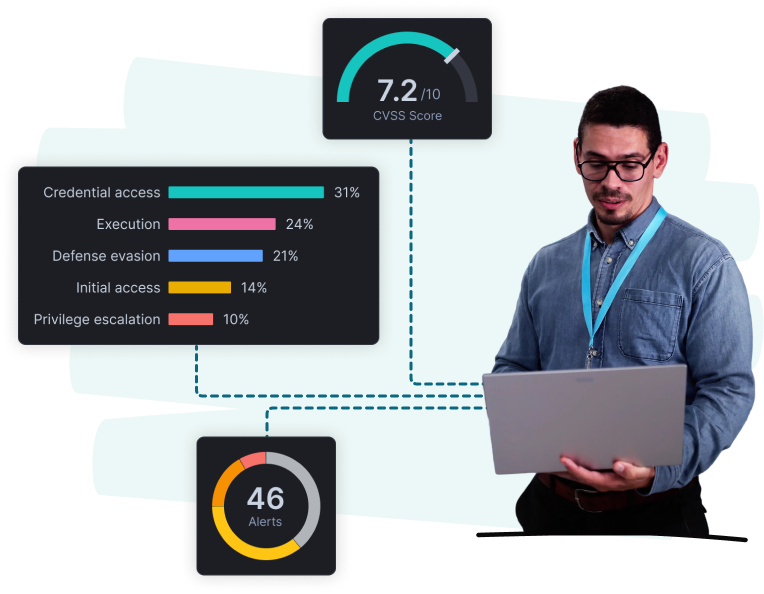
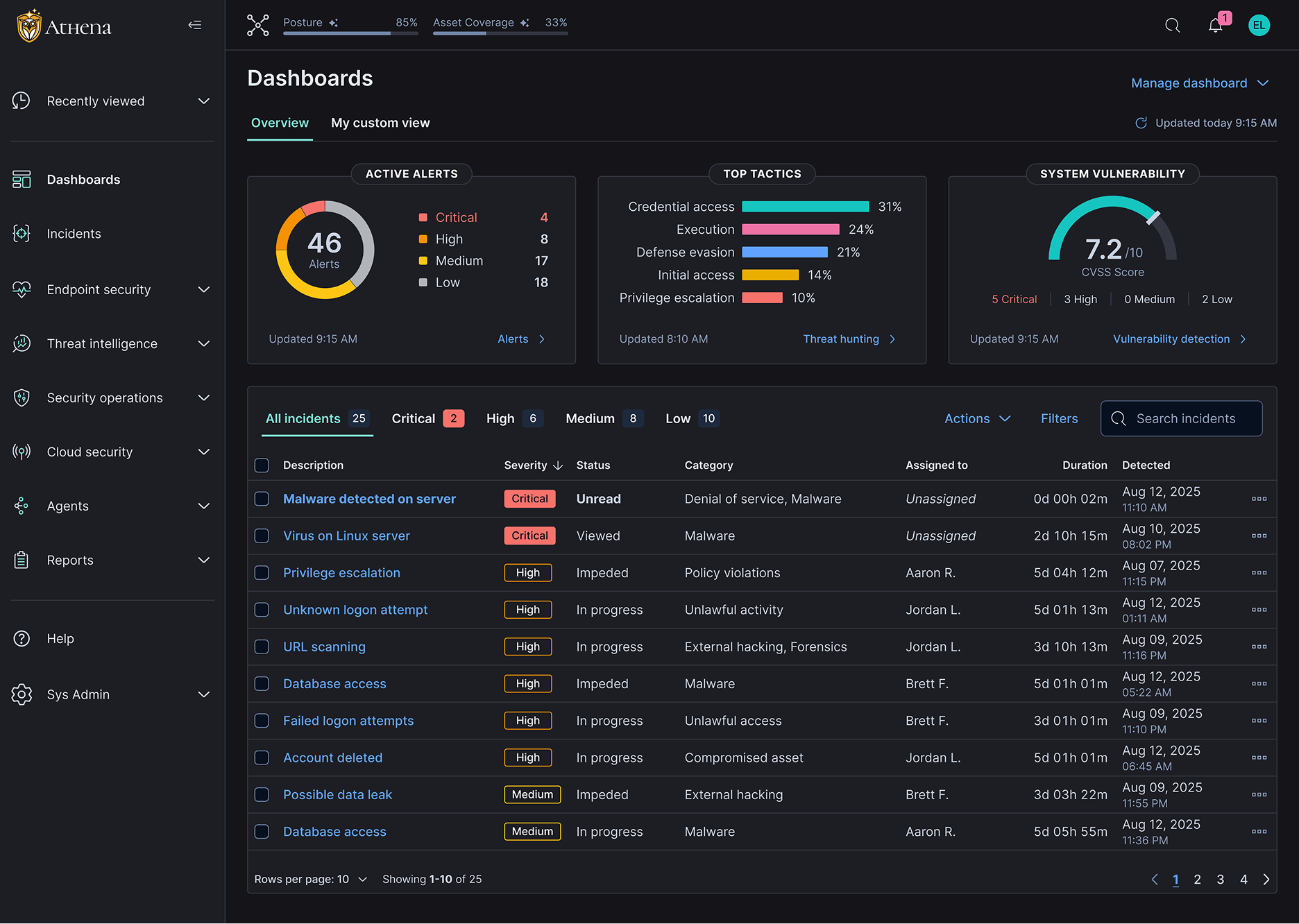
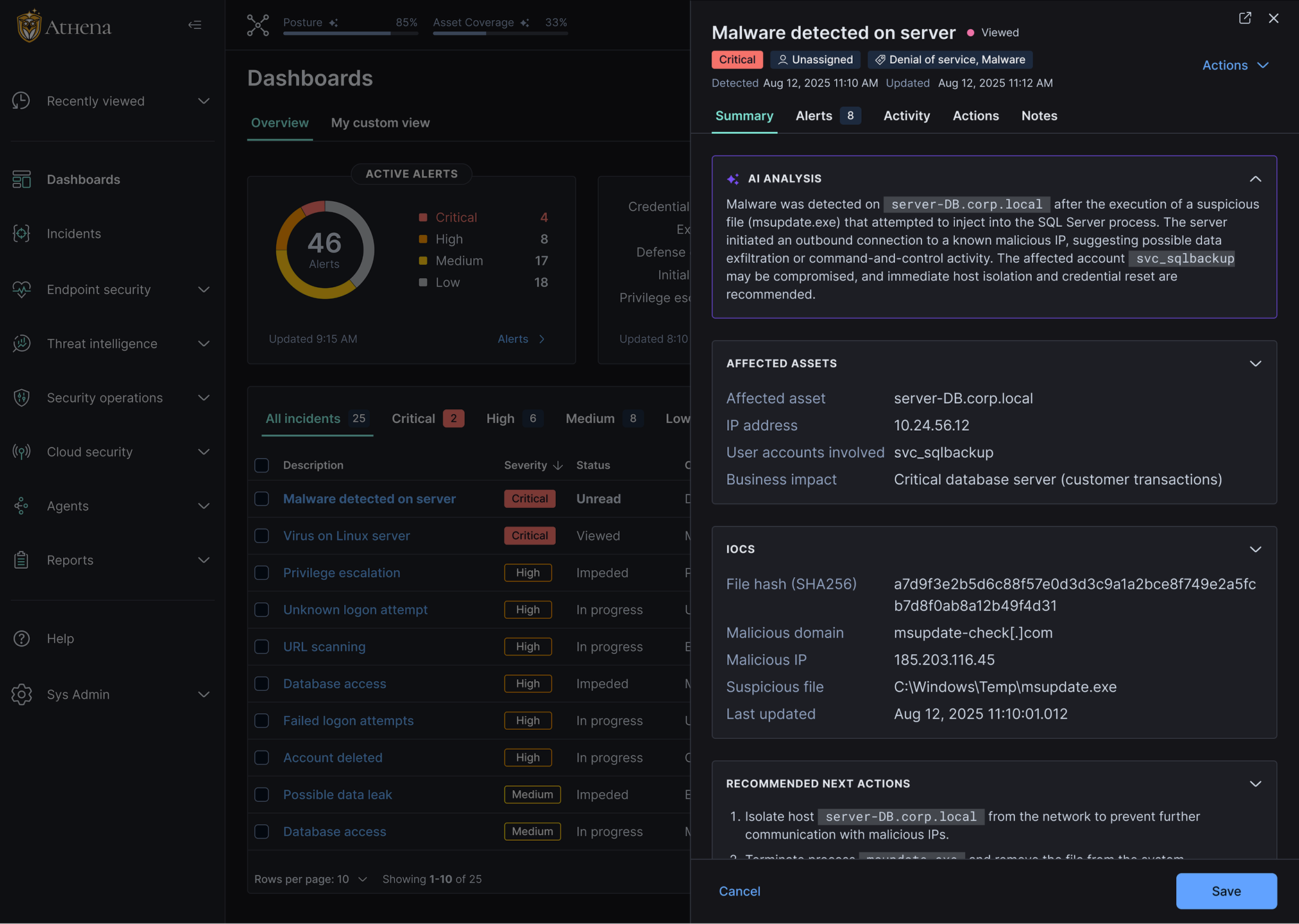
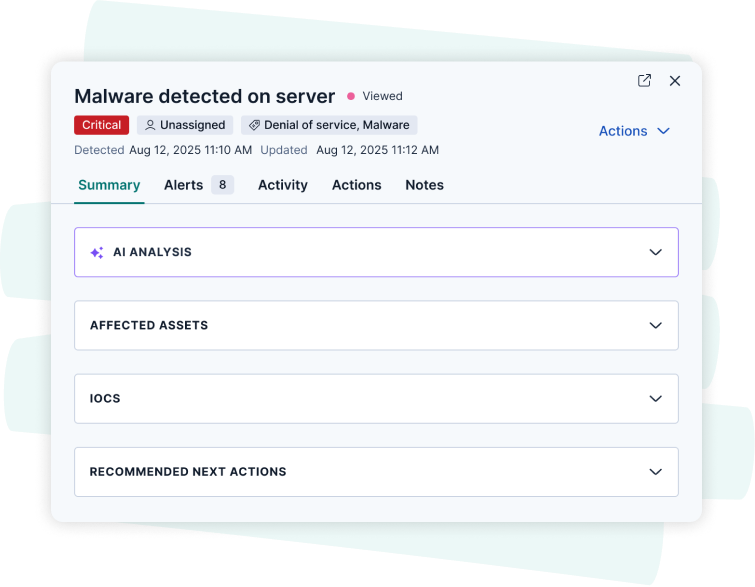
Athena combines SIEM, EDR & XDR capabilities into a unified, low-noise SaaS platform. UX Team focused on consolidating and surfacing large volumes of data from multiple sources into unified dashboards for advanced threat detection and response. We also added incident detail flyouts for quick access to critical information, which enabled users to make informed decisions when responding to incidents.

Activities and deliverables
User research, Prototyping, Design system, UX support, Development

Who we worked with
CEO, Product Owner, Dev Team

Challenges

Streamline alert investigation

Help users quickly explore alert details to determine scope and origin of incidents.

AI-enabled insights

Implement AI-driven analysis and automation to help combat threats.

Minimize distractions

Reduce alert fatigue and distractions to place focus on high-risk incidents.

Evidence gathering

Purpose of our research

After understanding the business requirements, goals, and available user data, we focused our research on:

  • Identify user needs and pain points
  • Analyzing competitor products and features to understand industry standards and opportunities
  • Interviewing stakeholders to identify key metrics and KPI’s important to managers
  • Exploring data visualization patterns that make key metrics easy to digest quickly

Studies

Key insights

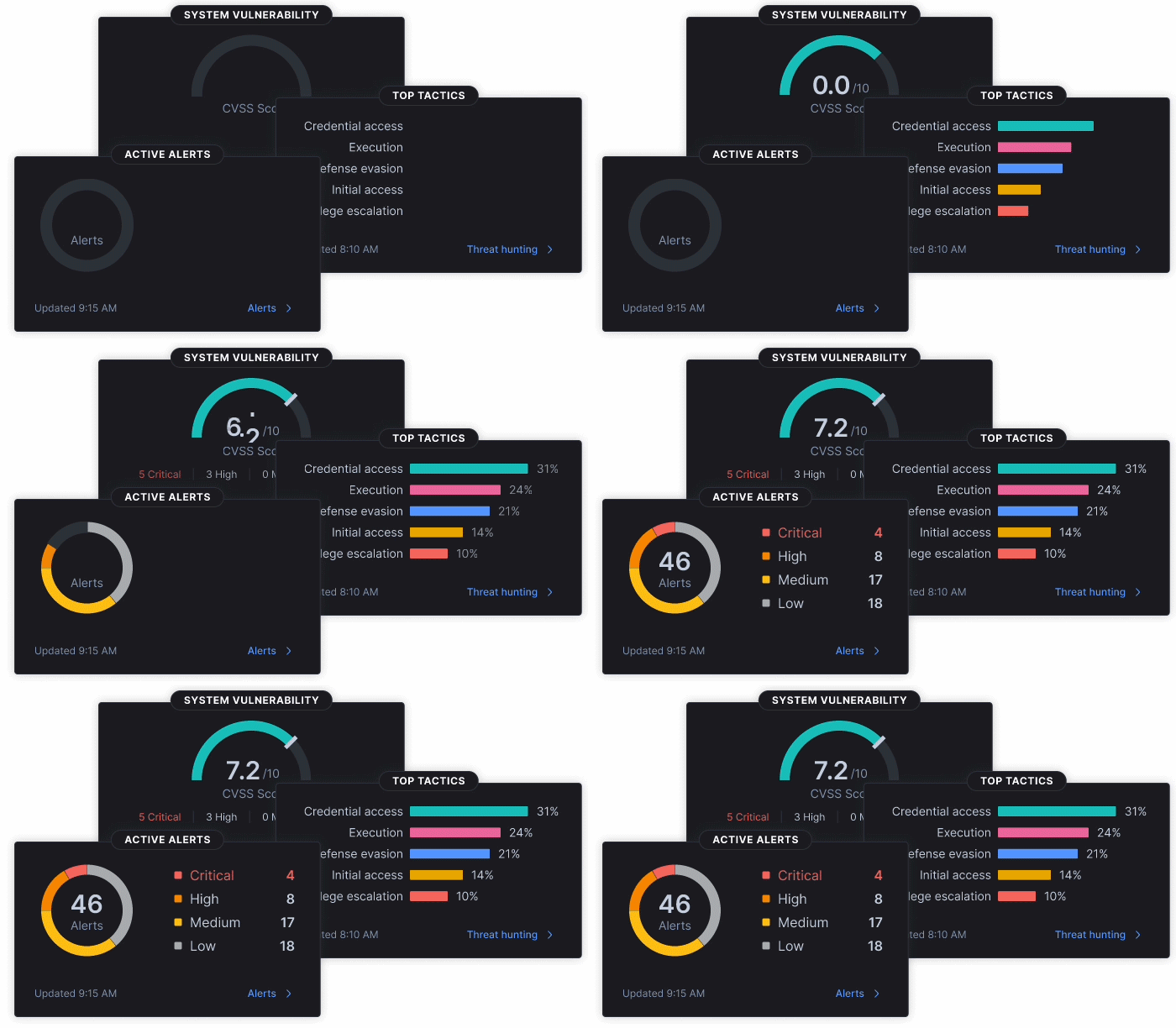
Animated updates keep users aware of real-time changes as they happen

We implemented subtle, real-time animations to bring the dashboard to life as data refreshes. These motion cues draw attention to shifting metrics without distracting from ongoing work. Users stay aware of updates as they happen and are less likely to overlook important alerts.

AI-enabled insights help users prioritize risk and accelerate response times

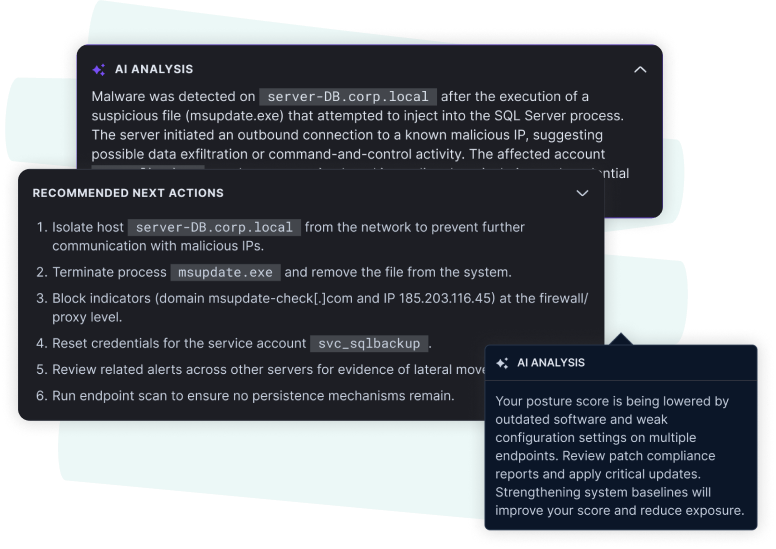
AI summaries and natural language chat features parse complex alert data into easy-to-read blurbs with actionable instructions and insights into what can happen if the alert is not addressed. Combined with bold visual cues and downplaying lower-priority ones, our approach reduces noise, cuts alert fatigue, and helps users respond to incidents faster and more effectively.

Visualizing trends over time improves manager engagement

Using flyouts, users can access all relevant incident details without leaving the main dashboard. This lets them investigate and respond to active incidents more efficiently, reducing interruptions and improving overall response time.

Conclusion

Our project consolidated data into a unified dashboard for advanced threat detection, adding real-time animations, incident detail flyouts, and AI-driven insights. These enhancements reduce noise, highlight critical information, and help users prioritize risk for faster, more informed responses. The result is a seamless, data-driven dashboard with incident management that keeps teams focused, reduces cognitive load, and strengthens their ability to detect and respond to threats in real time.

Your 100% USA-based, dedicated UX Team is ready!

Contact us for help with your SaaS application design.

Let's talk design

Related case studies

Power Conversion Confidential Client

Power Conversion

An industry leader in power conversion technology.